Category: Stories

  • NEW DECISION – Tribunal Declares: Parents of Disabled Children are Not Important to Public Interest

    Show of hands…

    How many families of disabled children are carrying a mountain of debt because only one member of the family can work due to ableism and constant advocacy in the education system?

    How many single parents are on government support because they can’t work due to their disabled children being excluded from childcare or school?

    I have some good news to report and then there is SHOCKING news.

    First, the good news.

    In a decision on a timeliness application, Parent v School District 2024 BCHRT 113, the tribunal confirms that parents can file a complaint under family status in connection with their child’s human rights discrimination case. I encourage you to read the decision in full.

    They say this is not unique and cite Independent School Authority v. Parent, 2022 BCSC 570 as evidence that this has been confirmed before. The timeliness application was not rejected because the school doesn’t owe “a service” to the parents, as originally stated in a human rights complaint decision, which rejected parents being connected under family status in Habetler obo Habetler v. Sooke School District and B.C. (Ministry of Education), 2008 BCHRT 85

    When you represent your child in a human rights complaint, any money received during a settlement or from a hearing decision will go directly to them. If you have any financial losses due to your child’s exclusion or emotional harm, then you have also experienced an adverse effect. So, parent(s)/guardians, you can submit a complaint just for you.  This is BIG news. It hasn’t been tested at a hearing yet, but your complaint will be considered. It’s confirmed. It’s so possible the tribunal doesn’t even consider it unique.  This absolutely needs to be done within the one year or it will not be accepted because…. And hold onto your hats, we are now moving into the shocking part of this decision.

    Brace yourself.

    The tribunal has declared with this decision, that parents who experience harm connected to their employment because of the discrimination their disabled child experienced at school, is not in the public interest to address this.

    A human rights tribunal.

    Has decided.

    We aren’t worthy enough. Not in the public interest.

    This is wild.

    If the tribunal felt this was in the public interest and could advance the code, they would accept a late filing application. But they don’t. That is a huge problem.

    This has really opened my eyes to reality.

    We have a lot of work to do.

    Parents of disabled children are not being considered a vulnerable population and the tribunal feels the public has no interest in our exclusion from the economy and essentially fully participating in life as adults or emotional harm that we experience.

    For some resent research on the link between mother’s mental health and their struggling child, read Wilmot et al. (2023). “Mother’s perspectives on dyslexia-related school struggles and the inter-connected nature of  mother and child well-being.”

    Now back to this decision.  

    [8] In the Grade 5 school year from mid 2017 to mid 2018, the Parent alleges the Child was struggling in school. She says that everything reached a “crisis mode” in that year as he would come home and have “meltdowns” after school, crying, throwing things, and punching pillows. The Parent says that she was constantly being called by school staff to pick him up or resolve issues at school. She alleges that communicating with staff was challenging as they did not understand his disabilities and his teacher was inexperienced.

    [11] On June 6, 2018, the Parent alleges she “resigned” from her secretary position to avoid an “emotional breakdown” related to issues with the Child at school.

    [38] The Parent states she is clearly not the only parent who needs to go on leave when their children with disabilities are not properly able to access their education and are not being supported. She submits that “the system” needs to start recognizing the toll and impacts on parents’ employment when disabled children are not getting what they need. The Parent argues her case is unique regarding the issue of a parent bringing a complaint of consequential harm arising from conduct related to their child in school. The Parent argues the School District is incorrect in its assertion that the issue is settled such that she is barred from succeeding because she does not have the necessary services relationship with the Respondent. I do not agree with the Parent that the services and family status aspect of her complaint is unique. There is a decision on this issue that was noted by the parties: Independent School Authority v. Parent, 2022 BCSC 570.

    (So, they admit that this situation and my alleged harm is not unique but that society doesn’t care. I even have a disability myself, but nope. Don’t care about the barriers around that either.)

    [37] In determining whether acceptance of a late-filed complaint is in the public interest, the Tribunal also considers whether there is anything particularly unique, novel, or unusual about the complaint that has not been addressed in other complaints: Hau v. SFU Student Services and others, 2014 BHCRT 10 at para. 22; Bains v. Advanced Air Supply and others, 2012 BCHRT 74 at para. 22; Mathieu v. Victoria Shipyards and others, 2010 BCHRT 244 at para. 60. Where a complaint raises a novel issue on behalf of a vulnerable group, which advances the purposes of the Code, this factor may weigh in favour of finding a public interest in accepting the complaint: Mzite at paras. 65-66. The Tribunal has considered gaps in its jurisprudence, on the one hand, and the existence of good precedents, on the other hand, in determining whether to permit a complaint to proceed: Mzite at para. 67.

    [39] In the end, I do not find this Complaint attracts the public interest in allowing it to proceed late filed. The Complaint was filed over four years late and the Parent has not provided any reasons for the late filing that attract the public interest in letting in proceed late. Further, the complaint is not sufficiently unique or novel to attract the public interest. Having not found it is in the public interest to accept the late-filed complaint, I need not address the issue of whether substantial prejudice would result.

    (Let’s all just take a breath)

    Parents aren’t enough of a vulnerable group and my case isn’t novel because of ONE case that hasn’t even made it to a hearing to judge its merits yet?

    BOLD statement.

    The tribunal thought this person’s case was of public interest.

    Schulz v. Camosun College, 2023 BCHRT 142

    [42] Millie Schulz argues their case is unique as it involves a complainant with ASD. While the Tribunal has addressed mental health discrimination in the provision of services, it has not addressed many of the issues impacting individuals with ASD, and their need for accommodation, especially in a school or employment setting. They cite one Tribunal case dealing with autism from 2011, which points out that the nature of adult autism and how it manifests itself in the workplace is poorly understood, and individuals with this disability are subject to stigma and stereotyping: Noriega v. B. C. (Min. of Children and Family Development), 2011 BCHRT 199 at para 28.

    What is the difference, may I ask?

    Does the Human Rights Commissioner stand with the decision by the Human Rights Tribunal and declare that unemployment and emotional harm of parents of disabled children are of no public interest?

    That we aren’t a vulnerable population?

    Show me where there is accessible childcare?

    Where?

    Look at the School Exclusion Tracker by BC Ed Access.

    Our own inclusion in the economy and having careers is hanging on by a thread. A very fragile thread.

    Look at the amount of money the School Protection program is spending on legal fees and settlements connected to human rights.  

    Along with my 30-page argument, I also submitted 60 stories of exclusion collected by Jenn Scharf, an example of an exclusion policy from another district.

    I’d love to organize a protest and show the government and the public just the number of people who are affected however, because the discrimination is so thick with lack of daycare, school exclusion and accessibility, people struggle even get themselves to a location to protest.

    What is your protest idea? We all pick a day and flood them with our stories?

    We need to build an army of stories.

    We need to get loud.

    We need to be heard.

    So, parents, feel free to cite this case when needed to state that this situation is not unique or novel.

    Let us remember the good stuff.

    So, the moral of the story is you can file your own complaint along with your child’s discrimination complaint. One complaint for them. One complaint for you. You’ll need to file an application to join them together later in the process if they both get accepted.

    Shockingly, the tribunal doesn’t see us as a vulnerable population worthy of public interest.

    That is going to need to change and the only way to do that is for us to file our own complaints when we file on behalf of our children. They need to read our stories. 

    One complaint for your child. One complaint for you.

    No matter what happens, a tribunal member will read it.

    Every complaint matters. You matter. Your child’s story matters. Your story matters.

    I have a question for any human rights lawyer reading this blog. Does a parent necessarily need to file a complaint on behalf of their child, or can they just file a complaint on behalf of themselves under family status if they wanted to?

    With so many children being on reduced school hours, even if the tribunal wouldn’t consider those decisions discriminatory, can parents still file a complaint under family status because those reduced hours negatively impacts them?

    *******

    Some recent noteworthy decisions in education from the Human Rights Tribunal.

    Student (by Parent) v. School District, 2023 BCHRT 237 

    The Parent obo the Child v. School District, 2024 BCHRT 91

    X by Y v. Board of Education of School District No. Z, 2024 BCHRT 72

    Ableism as defined on the BC Human Rights Commissioners Office website. https://bchumanrights.ca/glossary/ableism/

    “An ideology and system of oppression in society that holds that some bodies are more valuable than others, which limits the potential of people with disabilities. People with disabilities are assumed to be less worthy of respect and consideration, less able to contribute and take part and of less value than other people. Ableism can be conscious or unconscious and is embedded in institutions, systems and the broader culture of a society.”

  • Behind the Decision: Reflections and important findings on the recent human rights education case

    An anonymous submission

    As the parent who has been through the BC Human Rights Tribunal process, it’s been about a month since the decision came out and I still haven’t found my words to really summarize what I think of the whole experience. It’s a very emotional process. I was self-representing my daughter, which means I was going through this legal process without a lawyer. I did receive under 5 hours of legal consultation from the BC Human Rights Clinic. Thank goodness.

    I truly have mixed feelings about the whole process.

    I feel that accountability has occurred, just through the hearing alone. I am very pleased that this has been an empowering experience for my daughter. It has forever changed me, mostly for the better. I thank the tribunal member for the wonderful way in which she managed the experience for my daughter as a witness. Taking this case to a hearing has allowed me to feel a sense of peace about the whole thing, that will last me the rest of my life. Looking at this decision on CanLII just fills my soul. Continuing with the hearing was one of the best decisions I have made in my life. I would do it again, in a heartbeat. I have no regrets. I found out exactly how all this mess happened, and that satisfied a brain itch that would have frustrated me, forever. The story was told, in a decision, publicly. It’s still only a fraction of the bigger picture, but it’s enough.

    I also feel that the structure of human rights system process, is oppressive and traumatic, in ways that I cannot speak publicly about. This experience has been intense and extremely triggering. If given the opportunity to share this experience with those in power to change the system, I would be more than willing to spill out the whole story. At the same time I am very thankful to the individuals involved in the system at the Human Rights Tribunal and the role they played.

    Through this process, I did benefit from my university education, the support from my husband, family and friends, and I was able to spend the time and have access to resources that allowed me an opportunity to even take this to a hearing. I fully recognize and appreciate that this opportunity isn’t a possibility for everyone. I recognize that I have enough privileges to even access a hearing. I also felt the weight of responsibility, knowing I could do it. The system is so challenging that one of the motivating factors for me was the best thing I could to protect other parents and children from having to go through this, was to go all the way.

    For any parent(s) going through this process, I think you need to be so mad, that the anger becomes fuel to help you push through and withstand the strongest of storms. And it is a storm.

    At some point, after the hearing, my desire eventually shifted to be about letting the anger go, heal, forgive, and move on.

    However I end up finalizing things in my head, what will never change is the decision and the gifts in the decision that I hope will make education a safer place for children to learn and grow. People assume that schools are safe for all children. The reality is that they are not. Not all children.

    In the article by the Vancouver Sun, 2013, Parents in Conflict with Schools Need Advocates, Grieving Mother says, the coroner made recommendations.

    From the article:

    Here are the coroner’s recommendations to the Education Ministry:

    – Introduce a flagging system for all student files where a child is diagnosed with a mental-health problem.

    – Complete comprehensive reviews to determine lessons learned after the death of a student by suicide.

    – Develop policy so that any pertinent document — including emails — be placed in a student’s file.

    – Ensure all decisions regarding expulsion or withdrawal from class be provided to parents for input before a final decision by a school board.

    If number 1 & 3 were followed, my daughter’s case never would have happened. It was preventable.

    I am not completely done with the system. I am now going through the process of the system again. This time for my son.

    I hope this decision is an advocacy tool and human rights education opportunity for parents.

    Student (by Parent) v. School District BCHRT 237

    Here are the gifts I see in this decision.

    Meaningful inquiry

    [99] Next, in B v. School District, 2019 BCHRT 170, the evidence supported that the school district provided the child with the recommended supports and accommodations. The Tribunal found that it was “only with hindsight” that it was possible to say that the child could have benefited from more support: para. 81. It dismissed the complaint in part because there was insufficient evidence to demonstrate that the school district reasonably ought to have known that the child required more: para. 98. In contrast here, I have found that the District had sufficient information to trigger some kind of inquiry or response beyond asking the Student how she was doing and, assuming the counsellor did this, advising of available supports.

    [100] In short, I agree with the District that the Parent and Student were obliged to bring forward information relating to accommodation. The Parent did that, when she communicated that the Student had anxiety and trichotillomania and that school was taking a significant toll on her physical and mental health. That information should have been enough to prompt a meaningful inquiry by the school to identify what was triggering the Student’s symptoms and what supports or accommodations may be appropriate to ensure she was able to meaningfully and equitably access her education. The failure to take that step was, in my view, not reasonable. As a result, the disability-related impacts on the Student, arising from conditions in her Language 10 class between April 24 and June 27, 2019, have not been justified and violate s. 8 of the Human Rights Code.

    [104] In sum, I have found that the conditions in the Student’s grade 8 Language 10 class exacerbated the Student’s anxiety and trichotillomania, and that the District failed to take reasonable steps to investigate and address those conditions during the period between April 24, 2019, and June 27, 2019 (the last day of school). I find this is a violation of s. 8 of the Human Rights Code, and warrants a remedy, which I address below.

    Around self-advocacy for children with invisible disabilities:

    [90] Generally, it is the obligation of the person seeking accommodation to bring forward the relevant facts: Central Okanagan School District No. 23 v. Renaud, 1992 CanLII 81 (SCC), [1992] 2 SCR 970. This can be challenging for children, and especially challenging for children with invisible disabilities. I agree with the Parent that children who require accommodation in their school are in a different situation than adults seeking accommodation. Though they have a role to play in the process, that role will be age and ability-specific, and the burden cannot be on a child to identify and bring forward the facts necessary for their accommodation.

    IEP – For a Child with Generalized Anxiety Disorder and Trichotillomania

    [59] This ends the period of this complaint. However, it is important to note that, in the Student’s grade 11 year, the school developed an individual education plan, or IEP, for her. This IEP set out the Student’s strengths, learning preferences, and goals. It identified specific supports for the Student, including flexible due dates, ensuring the Student was not put on the spot in class, reducing workload whenever possible, providing a quiet learning environment, and frequent teacher check ins. It also established that the Student would meet bi-monthly with the school counsellor to work on her goals. The Student’s grade 11 counsellor explains that she saw the IEP as a way to reduce the burden on the Parent and to support the Student to advocate for herself. From the Parent’s perspective, this was a welcome development that should have been done much sooner.

    [7] In this case, there is no dispute that the Student has disabilities, namely generalized anxiety disorder accompanied by trichotillomania (hair pulling). She is protected under s. 8 of the Human Rights Code from discrimination in her education. This complaint is about the Parent’s allegation that the symptoms of the Student’s disabilities were exacerbated in grades 8 and 9 because of her experience in Language 10 and Language 11, and that the District failed to accommodate her disability-related needs in those classes.

    ** Even without a designation at the time, she is still protected under the Human Rights Code.

    Mental Health Stigma – Failure to Identify Diagnosis

    [34] The Parent did not see this email at the time. From her perspective, the email was not adequate to appropriately communicate the scope of the Student’s school-related needs. It did not fully communicate what the Parent had told the counsellor, and what she had expected would be passed along to the teachers. She felt it was also not realistic to think that the Student would approach a teacher and ask to be excused; in fact, this was not an option that it seems the Student ever exercised. In the Parent’s view, the failure to identify the Student’s diagnoses perpetuated the silence and stigma of mental health and undermined the Student. The message contrasts, for example, with the communication that the Parent sent to the Student’s teachers at the start of her grade 9 year, which said:

    Communicating and providing evidence of a diagnosis

    [13] In light of the Student’s barriers in advocating for herself, the adults in her life have had to take on a more proactive role. The Parent’s open and active communication has been critical to ensuring that the Student’s needs are recognized and met in school. Throughout the Student’s education, the Parent has let her schools know about her disabilities, and that she may require monitoring because she is unlikely to proactively seek the support she needs.

    [14] There is no dispute that, due to the Parent’s advocacy, various individuals within the School District were aware of the Student’s diagnoses before and during the period of this complaint. For example, in the spring of grade 7, the Parent provided the elementary school with a note from the Student’s psychiatrist confirming that the Student had a “long-standing diagnosis of General Anxiety Disorder”. At the Parent’s request, this note was placed in the Student’s school file.

    ** This is a very important aspect for parents to know, as this ensures that a district has a duty to accommodate.


  • Media Release: Exclusion Tracker Report 2022-23 Reveals Alarming Trends In Patterns Of Exclusion

    FOR IMMEDIATE RELEASE
    September 13, 2023
    Latest BCEdAccess Exclusion Tracker Report Reveals Alarming Trends in Patterns of Exclusion


    VICTORIA, BC – The BCEdAccess Society has released its 2022-23 Exclusion Tracker Report, the 5th
    year tracking the exclusion of disabled students from K-12 education in British Columbia. The new report
    highlights alarming trends around nursing supports and physical care, Kindergarten exclusion, exclusions
    lasting over 4 months, and the continued use of restraint and seclusion on disabled children.


    Executive Director Tracy Humphreys stated, “This report is a wake-up call. The data clearly shows we
    cannot wait any longer to address these systemic issues head-on. Every child has the right to equitable
    access to education, and access delayed is access denied.” She went on to remind school districts and
    independent school authorities that under the Accessible BC Act, they should all have accessibility plans,
    along with a committee and a feedback mechanism, to identify and address barriers to access. Many do
    not yet have one or all of these things in place, and the root causes of exclusion are barriers that need to
    be reduced or eliminated.


    BC School District Accessibility Plans


    The report highlights the following issues that stood out from the 2022/23 data:


    Disproportionate Impact on Vulnerable Groups: The data confirms that disabled students who are
    Black, Indigenous, People of Colour, 2SLGBTQ+, and from low-income backgrounds face compounded
    barriers due to systemic racism, ableism, and other forms of discrimination.


    Alarming Rise in the Length of Time Students are Excluded: The 2022/23 data indicates a significant
    surge in exclusions lasting over four months, suggesting a concerning trend of normalizing exclusion.
    Restraint and Seclusion Concerns: Reports continue to come in of the use of restraint and/or seclusion
    on disabled children, practices with severe psychological and sometimes physical repercussions.
    Issues with Nursing Support and Physical Care: Recent changes in Nursing Support Services have
    led to increased exclusions, particularly affecting students with physical disabilities or chronic health
    impairments.


    Kindergarten Exclusions: Kindergarten and grade 1 students are being excluded at higher rates than in
    the first couple of years of tracking, impacting their academic progress and social development.


    BCEdAccess Chair Nicole Kaler stated, “Our province is at a critical juncture. The findings of this report
    should prompt urgent action.” She noted that BCEdAccess meets with Ministry of Education and Child
    Care staff on a regular basis and efforts are made to address barriers to access for students but current
    legislation and policy does prevent a lot of resolution to individual issues. “The Minister of Education and
    Child Care is aware of the Exclusion Tracker and several school district boards have seen our
    presentation on the Tracker data which includes suggested solutions.”


    A concerned parent shared, “It’s heartbreaking to see my child being left behind. We need immediate
    action to ensure that every child has the support they need to succeed in school.”


    70 students chose to fill out the optional section where BCEdAccess asked 3 questions:

    1. Tell us about how you were excluded:
      “I missed the year end waterslides event and a walk to the ice cream shop because I got mad” – 7 year
      old student with ADHD, lower mainland BC
      “I get yelled at all the time, even by grownups. I know I did some wrong things but they always blame me
      even when it wasn’t me. Then I get sad and scared. I used to have a helper, even in Gr1. Why can’t I
      have a helper?” – 9 year old autistic student, central coast, BC
      “I didn’t want to go to school anymore because I would keep getting bullied. No one cares about me. They
      want me to get hurt.” – 8 year old autistic student, central BC.
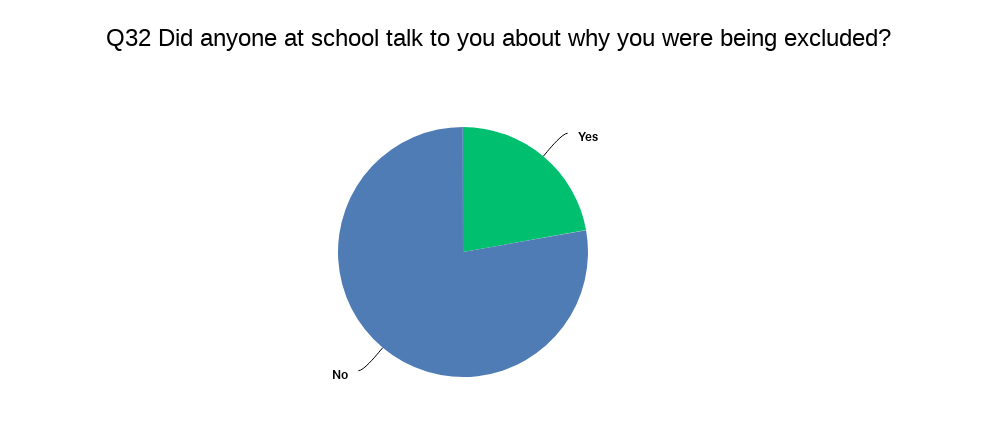
    2. Did anyone at school talk to you about why you were being excluded?
      Just over half responded no to this question.
    3. What do you hope will happen now?
      “I hope my new school will have nice kids and I will be safe. If not, I will try and protect myself.” – 8 year
      old autistic student, lower mainland BC
      “That my class will do things I can do and not leave me behind.” – 9 year old physically disabled student,
      central coast, BC
      “I want to stay in [new teacher’s] class, I like to go outside and play with my friends, I don’t want to go in
      the room again..” – 5 year old student waiting for assessment, northern BC

      BCEdAccess urges media, policymakers, and the public to engage with the findings of this report and join
      the movement towards a more inclusive and equitable education system. The full report is available on
      the BCEdAccess Exclusion Tracker web page:
      https://bcedaccess.com/exclusion-tracker/
      Media Contact:
      Tracy Humphreys, Executive Director, BCEdAccess Society
      Phone: 1-250-858-5165
      Email: tracy@bcedaccess.com
      Social media: @bcedaccess
      Website: https://atomic-temporary-88612101.wpcomstaging.com

      About BCEdAccess Society:
      The BCEdAccess Society is an organization of families of children and youth with disabilities and complex
      learners all over the province of British Columbia. We champion and support children and youth who have
      disabilities and who are complex learners to reach their full potential in BC education, and in all aspects of
      their lives.
      This is achieved through families supporting families, sharing information, providing education to families,
      allies, professionals and students, providing community engagement and awareness, and other activities
      to promote equitable access to education and inclusion for all. We run a well respected annual
      parent/guardian advocacy conference, bringing together families, self-advocates, educators and allies of
      children and youth with disabilities. We also do research into the exclusion of students with disabilities
      from school and community, and other disability issues impacting children and youth. We advocate to
      local and provincial government on behalf of families to improve accessibility in all aspects of the lives of
      children and youth with disabilities.
      – END –
  • Your Voice Matters: Back To School and the Exclusion Tracker

    Back to school time is not always easy for disabled students and their families. If you’re a parent or guardian, we have a post for back to school to help you work through some of the anxiety:

    8 Things To Do For Back To School

    The reality is that while most British Columbia schools are back in session today, not everyone gets to return with their peers.

    Some families have already been asked by their child’s school to keep them home – for today, the week, or longer, as they are not prepared to welcome them back to school yet.

    Others have been asked to only bring their kids for part of the day – again, for days, weeks, or indefinitely.

    Schools are struggling with education assistant and even teacher shortages, and may have other reasons to make this request. Still, access delayed is access denied, and disabled students have the right to attend school, like every student.

    Our exclusion tracker data from last year shows an increase in Kindergarten student exclusions, and exclusions lasting over 4 months!

    Look for our 2022-23 School Exclusion Tracker Report, releasing in the second week of September.

    Image of a social media post about a child whose biggest request for the new school year is that he start school just like everyone else.

    Our new School Exclusion Tracker is live:

    2023-24 School Exclusion Tracker

    Report your exclusion if you are a K-12 student, or report on the exclusion of your child/youth from their edcuation if you are their parent/guardian.

    The definition of ‘exclusion’ is left to you when you report – it might be not being allowed to attend full days, or not having the support needed to access the curriculum, or many other experiences.

    This survey also takes you through the path back to inclusion – steps you can take to advocate for better inclusion.

    And it offers the opportunity for student feedback – a place for your child/youth to provide their feedback in a section just for them.

    We have an optional section where we collect demographic information about your child’s and your family’s identity under different protected classes. We share the resulting data to show the disproportionate impact of exclusion on certain oppressed groups.

    RESOURCES

    We also have a number of resources, both ones we have created and really great resources from other organizations:

    Advocacy tips and the complaints process

    Duty to accommodate

    How to write an advocacy email

    Parent Handbook On Inclusive Education

    You can find more information on our

    Resources Page

    If you want to advocate for systems change, we have a new page dedicated to the Accessibility Plans for each school district. Districts also have to have a feedback mechanism and we encourage you to report barriers to accessibility to them.

    District Accessibility Plans

    The province has a feedback mechanism too – report things that are provincial in nature to them here:

    Provincial Accessibility Feedback

    Back in 2017, Executive Director Tracy Humphreys met with then-Education Minister Rob Fleming, and said,

    “One day I’d like to come here to talk about the quality of education for disabled students, but I’m still trying just to get them through the door.”

    6 years later, we try to cover education quality too – but we’re still very focused on addressing the root causes of exclusion. Thankfully, there are many organizations we’re fortunate to be supported by and to work with who are providing individual advocacy support, and doing systemic advocacy for change:

    ADHD Advocacy Society of BC

    BC Complex Kids Society

    British Columbia Confederation of Parent Advisory Councils (BCCPAC)

    Down Syndrome BC

    Dyslexia BC

    Family Support Institute of BC

    Inclusion BC

    Inspire Kids FASD

    Share any other helpful organizations in the comments below! We’d like to update our Resources page with more disability-specific organizations that do individual advocacy support, and systems advocacy in K-12 education.

    Finally, please follow us on social media platforms @bcedaccess. We do so much more than systems advocacy! We have an annual advocacy conference in October, AdvoCon2023, and events through the year. We offer workshops and presentations, a peer support group, online social groups for kids, and more. Reach out! tracy AT bcedaccess DOT com

  • Taking Human Rights Back To School – a Primer

    Image with bright coloured waves and a call to click on it to get early bird tickets for AdvoCon2023

    You may want to bookmark this post for future use!

    We are now into August, and even though we still have some summertime left until school starts, some of us may be feeling anxious about the upcoming school year for our children, our family and ourselves.    

    Depending on how the previous years have gone, thinking about the next school year can certainly trigger our own internal alarm systems. Fighting for inclusion, a fair and equitable education, and one that is free from discrimination for our children, can be challenging at times. It can feel like the system is against us. Remember that there are pockets of positivity and support that also exist. Knowing your rights and the rights of your child is especially empowering and can help reduce some of the anxiety as you anticipate the upcoming school year.

     Inclusion seems to be happening on an individual level by luck and chance around our province, and not systemically. We are all crossing our fingers that our kids win the ‘lottery’ and get placed in the classes of those amazing teachers who just “get it”. 

    But we don’t need to just hope to survive the year based on luck. 

    Understanding your child’s human rights in the education system and advocating with those in mind is an extremely powerful approach. The more you understand how the duty to accommodate applies to your child in school, the stronger your advocacy impact will be, and the more empowering the experience can be. 

    It is not uncommon for school staff and teachers to not fully understand how human rights apply to education. It isn’t something that they are taught before, or when, they begin working in the system. 

    Wondering if your disabled child is experiencing discrimination at school, all comes down to the question: Is your child “accessing their education, equitably”? So, what does that mean exactly? 

    It means they have a right to an equitable opportunity to receive and participate in education. This does not mean that they are given the exact same as everyone else. Equity means that they are given what they need so they have a chance to learn and show their learning. 

    Here are some examples of your child’s rights that are supported by the Human Rights Code, under the duty to accommodate:

    1. Your child’s IEP supersedes a teacher’s classroom autonomy and classroom management decisions.  Which means, your child’s IEP is the priority over their personal teaching opinions and how they like to run their classes. IEPs are very important. 
    2. Your child has a right to go to school and not be exposed to discrimination-based harassment. (Bullying connected to their disability, race, gender, etc.)
    3. They also have the right to be in a positive school environment.
    4. Your child has a right to receive reasonable accommodation so they can access their education. Which means, if your child is struggling or failing, they are not accessing their education and they are not receiving reasonable accommodation. Document the failing and the struggle that they are experiencing. The more evidence you have, the more effective your advocacy will be. A child struggling and failing is an indication that the accommodations that the school provides, or lack of, is not working. It’s their responsibility to make this work.

    Here are some examples of your rights and responsibilities that are supported by the Human Rights Code.

    1. You have a right to be consulted on your child’s education. The school has the final decision as to what reasonable accommodations look like for your child, but they must consult with you and at least consider the information you offer about your child. This needs to be meaningful consultation. 
    2. Both you and the school have a duty to co-operate in good faith. Which means respectful language on both sides and no dirty parlor tricks from the school system. I would suggest you review the code of conduct that will be posted on your school districts website, and they need to follow that as well. 
    3. You have a responsibility to facilitate the implementation of accommodation decided by the school. You can facilitate and still keep advocating. 

    Through the School Act, you have a right to appeal if you do not agree with the final decision of the school. This is a much faster process than the current Human Rights Tribunal process. The School Act and the Human Rights Code are two separate legislation Acts. Processes are different. Goals are different. Outcomes will be different. 

    Filing a complaint with the Human Rights Tribunal means that your child has experienced harm that is connected to their disability. It’s about harm that has already occurred, and harm that you will need to have evidence of. More blog posts on this will be coming in the future. 

    Advocacy is a skill that can be developed. One learning opportunity coming up is our fall advocacy conference:

    AdvoCon2023

    It’s also important to know when to ask for help. There are benefits to working together as a team, and to having advocacy support. There are PAC groups that can help parents advocate, and external organizations as well. Please see our

    Resources Page

    To understand more about the Duty to Accommodate, please see our Duty To Accommodate Page.

    Look for more pages on education law, and other avenues of advocacy and complaint beyond the education system such as the BC Ombudsperson, the Office of the Information and Privacy Commissioner, Teacher Regulation, and more over the next few months as we add some amazing resources gifted to us by a dedicated parent advocate.

    For more information on Students rights see the student rights toolkit that was jointly created by Family Support BC and BCEd Access.

    For more information on Parents/Guardian Rights in Education see the Parents/Guardian toolkit that was jointly created by Family Support BC and BCEd Access. (Insert link)

    For an excellent guide on advocacy in the BC school system, see the Parent’s Handbook On Inclusive Education, now in it’s 6th edition, created and hosted by Inclusion BC:

    Subscribe to our blog:

  • #AdvoCon2023 EarlyBird Tickets Now Available!

    #AdvoCon2023 EarlyBird Tickets Now Available!

    We’re delighted to announce that for our 9th annual advocacy conference, #AdvoCon203, we’ll be cohosting with BC People First, an independent voice of self-advocates in BC for over 40 years.. AND we’re going hybrid, with all 4 days online, 2 of them in-person and broadcast, at Simon Fraser University, Surrey!

    Early bird tickets now available, save your seat here!

    Following a very successful 3-year shift to an exceptional online conference experience, we are ready to safely bring back an accessible in-person component to this year’s event while keeping the same great online experience you’ve come to expect:

    AdvoCon2023: Breaking Barriers Together

    A Hybrid Event On Self-Advocacy and Disability in Education

    Thursday, October 19th to Sunday, October 22nd on Whova

    and

    October 21st and 22nd at Simon Fraser University, Surrey Campus

    AdvoCon is an annual education advocacy conference organized by the BCEdAccess Society, a grassroots, BC nonprofit society and Canadian charitable organization, founded in 2014. We are parents and guardians of students with disabilities and diverse abilities from all over the province. Our focus is action for equitable access to education, and we are led by the population we serve – disabled people, BIPOC, 2SLGBTQ+, and other people in protected classes under human rights.

    Presentations, workshops, and panels fall into our four streams of Health and Wellbeing, Advocacy in Education, Professional Development, and Systems Advocacy. Self-advocacy and ‘Nothing About Us Without Us’ will be a focus throughout.

    BCEdAccess and BC People First are proud to be providing CART captioning, ASL interpretation and Active Listeners along with other accessibility features both online and in-person.

    Don’t delay, get your tickets today!

    Confirmed speakers so far include:

    • Minister of Education and Child Care Rachna Singh for a brief address
    • MECC Inclusive Education and Framework for Enhancing Student Learning staff to present on these two areas and how they work together
    • Parliamentary Secretary for Accessibility Susie Chant, and Assistant Deputy Minister Sam Turcott
    • MLA Katrina Chen will facilitate a discussion on inclusive child care
    • Levonne Abshire, Levonne Abshire Coaching and Consulting
    • Dr. Christine Ho-Younghusband, Institute for Public Education BC
    • Anne Turner, Disability rights advisor, artist and author
    • Symbia Barnaby, Healing Nation Coaching and Consulting
    • Cyndi Dalglish, EA Standards of Practice Working Group
    • Ryan Kappmeier, EA Standards of Practice Working Group
    • Sarah Brooks, Teachers of Inclusive Education
    • Annabree Fairweather, Confederation of University Faculty Associations
    • Regan Rankin, Teachers of Inclusive Education
    • Andree Gacoin, BC Teacher’s Federation
    • Tracy Humphreys, Executive Director, BCEdAccess
    • Andrea Hilder, Hummingbird Consulting
    • Nicole Kaler, Chair, BCEdAccess
    • More added every day!

    Hosted online on the Whova app, and at the Simon Fraser University Surrey campus, speaker sessions will run all day, with included lunch and coffee breaks in-person. There will be a fun event in Surrey on Saturday night, and informal opportunities on the Whova app and at the venue to make connections.

    Early Bird tickets available now until September 20th, 2023

    We can’t wait to see you!

  • The Role of Justice in Education Advocacy: Reflections During Black History Month

    The Role of Justice in Education Advocacy: Reflections During Black History Month

    By Nicole Kaler, Chair, BCEdAccess Society

    ___________________________________________________________

    At the end of Black History Month, I am taking time for reflection on Black Excellence and Black Futures. 

    In honour of this month, I am going to dig a little deeper than usual and share how my identity as a Black parent impacts my vulnerability as a community member and part of the leadership team of BCEdAccess. I also want to share a personal experience that has informed my approach to advocacy with our education system, as we are also at the end of Inclusive Education Month. 

    My history:

    My parents immigrated to Canada from the Caribbean. They left one colonised land for another with hopes of better opportunities. Where they came from the school system had many Black teachers and educational leaders. They were therefore unprepared for the struggle that came with being Black in school in BC. 

    My early memories of Kindergarten are of being paralysed by the way that the teacher spoke to me, and having her say that I was “slow” (even using the ‘r’ word). I was often separated from the class because of my “slowness”, not out of the room, just outside of the circle. I also did different activities by myself. At some point, I felt so sick everyday that my parents stopped taking me to school. Eventually, my parents put me in a private school that they could not afford. The majority of my very early school memories are of crying and being distressed because I wasn’t smart and/or white. I don’t know how long it took for school to impact me this way, but definitely by 6 years old, I hated everything about myself. 

    My educational journey started poorly, but that wasn’t how it continued or ended. My point in sharing is to explain that I approach my work in advocacy with a personal familiarity with oppression in education, beyond the experiences that I have had with my disabled child. 

    My lens- disability and race

    I used to keep my Blackness in the background as a parent advocate. I did not want to “complicate” conversations about equitable education for disabled students. I know from personal experience that it is easier to have conversations with my non Black peers about ableism than about anti-Black racism. Between defensiveness and denial, I still hold onto the reality that disability advocacy by families is a historical powerhouse. Families put an end to the institutionalisation of loved ones, while residential schools remained open. The injustice of families separated because of disability was rightly ended, but that did not naturally extend to First Nations families. and all children.

    Rights-based advocacy for equitable education for disabled students is my passion, but  justice is my goal. Justice takes into account how identities like race, ethnicity, gender, class, and sexual orientation, affect a disabled person’s experience. By extension, as parents/ guardians/caregivers, the response to our advocacy is also affected by our identity. 

    When working in advocacy circles, the reality is that the general attraction to “sameness” means that even when the focus is on anti-oppression or rights, the executive make-up and public representation in these organizations normally look like the government institutions that we are challenging to be better. In addition, there is a dominant culture in our power structures and they are most comfortable working with people like themselves and making changes that are relatable or of benefit to them personally. 

    I have observed our reluctance as a community to understand the need for intersection in our work, but in the spirit of Black History Month and having both disabled and non-disabled Black children complete their K-12 education here in BC, what I feel free to say is that to be effective our advocacy recognises that:

    • Both racism and ableism in a classroom look like assumptions and stereotypes leading to academic limitations.
    • Both racism and ableism are compounded by the lack of empathy that people have when they won’t relate to someone who is different. 

    Ableism is interconnected with other systems of oppression, and true justice comes when we begin to appreciate that a disabled person who is a member of another affinity group has unique experiences, as do their families and those who advocate on their behalf.

    I am very proud of being a part of BCEdAccess and working for justice. I come ready to support every family as my approach is the culmination of every microaggression and overt racist act experienced by me, my children and my family. 

    I hope that everyone had an informed Black History Month, and that we continue to strive to be a community space where we are open to acknowledging our differences, alongside our common challenges and goals. 

    ____________________________________________________________________

  • Discrimination continues in 4th year of tracking exclusion in BC schools

    For immediate release

    Discrimination continues in 4th year of tracking exclusion in BC schools 

    Victoria, 29 August 2022 – This year’s Exclusion Tracker report shows BC children and youth with disabilities missed thousands of days of school, were left without support or instruction, were left out of field trips, clubs and events, were secluded and restrained, and numbers haven’t improved over 4 years of collecting and sharing data.

    For 4 years parents, guardians and caregivers have been reporting to BCEdAccess the exclusion of their disabled children and youth from the BC school system.

    This year’s BCEdAccess Exclusion Tracker reports show 4760 individual incidents of disabled students being excluded from their education in the 2021/22 school year.

    The report unearthed other BC school exclusion trends in data, compared over 4 years:

    1. September – Gradual entry and partial days

    54 reports specifically cited gradual entry/being asked to keep their child home due to no EA or Nursing support in September 2021/22.

    This resulted in 342 missed school days for just these 54 students in the month of September.

    1. Restraint and Seclusion, and systemic oppression

    “Schools are still keeping children in isolation and seclusion, away from their peers and the supports they need to de-escalate,” says Tracy Humphreys, Executive Director of the BCEdAccess Society. “Others are restraining children, without first using de-escalation, earlier intervention or following safety and support plans. Districts do not collect data or information on restraint and seclusion room use,” says Humphreys. 

    The report finds that both overall and more specifically within respondents who reported restraint or seclusion, there is overrepresentation of some child/youth identities.

    Restrained/Secluded2020/212021/22
    H and R42
    G1616
    Waiting for assessment23
    Southeast Asian30
    East Asian02
    African12
    Indigenous56
    LGBTQ2SIA+78
    Income under $25K54

    Identities have been changed, but the following is in a report from last year’s survey:

    A Kindergarten student is waiting for assessment. There was an incident where they showed some aggression and now are only allowed to attend 2 hours per day. They are West Asian and African, and have a single parent earning under $25K per year.

    1. Student Voice

    This year a voluntary set of questions for disabled students to answer directly was included. 34 students responded. Nearly 78% of them were not told why they were excluded by the school:

    Here’s what some of them had to say:

    • Tell us about how you were excluded.
      • I got in trouble for other kids bugging me.
      • I played a game I did not understand
      • Can’t be in the class with my friends; Can’t take the school bus
      • They make me stay in the calm room. I am not allowed out. I am in jail.
    • What do you hope will happen now?
      • I will get the help I need
      • I will get to play outside with my best friend. He is in the other class.
      • They will make a plan for me
      • Be with my friends in the class, take the school bus, be included

    “BCEdAccess meets with the Ministry of Education and Child Care staff on a regular basis and efforts are made to address barriers to access for students but current legislation and policy does prevent a lot of resolution to individual issues. The Minister of Education and Child Care is aware of the Exclusion Tracker and several school district boards have seen our presentation on the Tracker data which includes suggested solutions.” Nicole Kaler, Chair, BCEdAccess. 

    “Not having an up to date provincial policy and having a ministerial order that allows exclusion is discrimination embedded in law. “ says Kaler.

    -30

    Media contact:

    Tracy Humphreys, Executive Director tracy@bcedaccess.com

    The BCEdAccess Society is an organization of families of children and youth with disabilities and complex learners all over the province of British Columbia. We champion and support children and youth who have disabilities and who are complex learners to reach their full potential in BC education, and in all aspects of their lives. 

    This is achieved through families supporting families, sharing information, providing education to families, allies, professionals and students, providing community engagement and awareness, and other activities to promote equitable access to education and inclusion for all. We run a well respected annual parent/guardian advocacy conference, bringing together families, self-advocates, educators and allies of children and youth with disabilities. We also do research into the exclusion of students with disabilities from school and community, and other disability issues impacting children and youth. We advocate to local and provincial government on behalf of families to improve accessibility in all aspects of the lives of children and youth with disabilities.

    Learn more at https://bcedaccess.com/

    Follow us on social media: @bcedaccess

    What is restraint?

    Restraints include the use of physical force, mechanical devices, or chemicals to immobilize a person. 

    What is seclusion?

    A type of restraint, seclusion involves confining a person in a space from which the person cannot exit freely.

  • International Human Rights Day 2021

    It’s International Human Rights Day today. Usually we try to have some kind of learning event on this date because our organization is focused on the human right to equitable access to education.

    However, we just finished our 8 Days Of Action For Access and our volunteer team is pretty spent 🙂

    So instead, we’re sharing the highlights from these days of action, but first, some information about human rights from the United Nations:

    Human Rights Day

    Know your rights and help spread the word:

    Learn about the United Nations Sustainable Development Goal #4, to Ensure inclusive and equitable quality education and promote lifelong learning opportunities for all:

    https://sdgs.un.org/goals/goal4

    The 8 Days of Action for Access was an incredible grassroots effort, supported by many organizations:

    BC People First, BC Complex Kids Society, ACT Autism Community Training, Autism BC, Down Syndrome BC, GIRLS CLUB, Family Support Institute, Inclusion BC, BC Teacher’s Federation and Dyslexia BC

    Here are just a couple of photos from the Day 8 rally, we’ll add more as we get permission:

    photo of a white woman with long straight red hair in a long black coat speaking at a microphone. She is standing on the bottom step of a wide set of concrete stairs with columns behind her (the Vancouver Art Gallery) and a lion on a pedestal. huge banners behind her say IMAGINE DISABILITY RIGHTS. A person with a camera is just behind her off to the side, filming.
    Tracy Humphreys speaking at the Vancouver Art Gallery on December 3, 2021
    A white woman and an East Asian woman in masks stand next to each other, the white woman holds a sign that says HAVING A CHILD WITH A DISABILITY SHOULDN'T BE A TICKET TO POVERTY!
    Dec 3 rally attendee holding up a sign.

    And here’s the video of that rally.

    BCEdAccess Day 8 Rally for Disability Rights

    We’ll be uploading all of the Days of Action videos to our YouTube channel within the next few weeks! It helps if you like and subscribe!

  • #AdvoCon2021 – our emcee, Heidi Vinois

    #AdvoCon2021 – our emcee, Heidi Vinois

    The amazing Heidi Vinois is always the emcee of our annual education advocacy conference!

    Read all the details about our conference here:

    TICKETS

    This year the conference is being held online from September 22 to 26. Heidi brings us all together and grounds us through the experience, and then closes us off with prize giveaways and a meaningful wrapup that reflects the importance of connections and education advocacy. 

    Heidi is a parent to 5 children. Besides advocating for her own children, she works very hard behind the scenes to support families and strengthen inclusion both in her local school district, and also province-wide through her work as one of the members of the advisory board of the BCEdAccess Society. Even in her public role as conference emcee, her whole job is to support and elevate the voices of others.

    Heidi really knows how to bring a room together, and she’s pretty fun, too! We hope you will come see her in action and maybe thank her along with us at this year’s conference!

    See you online!!